10 Home Interior Design Mistakes to Avoid Before Starting Your Project
Designing your dream home is an exciting experience, but making the wrong decisions during the planning stage can lead to unnecessary expenses and inconvenience. From choosing unsuitable furniture to ignoring storage requirements, small mistakes can affect the overall appearance and functionality of your home.
Understanding common home interior design mistakes can help you make better decisions before starting your interior project. Whether you are designing a new apartment or renovating an existing house in Kochi, proper planning is essential for creating a comfortable and beautiful living space.
At Casa Solutions, we believe that successful home interiors combine aesthetics, functionality and thoughtful planning. Here are ten common mistakes homeowners should avoid.
1. Starting Without a Proper Interior Design Plan
One of the most common home interior design mistakes is starting work without a clear plan. Choosing furniture, colours and materials without understanding the complete layout can create inconsistencies.
Before beginning your project, consider:
The available space in each room.
Your family’s daily lifestyle and requirements.
Furniture placement and movement space.
Storage requirements.
Your preferred interior design style.
A proper design plan helps maintain consistency throughout your home and reduces unnecessary changes during execution.
2. Ignoring the Available Space
Every home has different dimensions and layout requirements. Selecting oversized furniture for a small room or leaving large empty spaces in a bigger room can affect the overall balance.
For smaller apartments, consider multifunctional furniture, wall-mounted storage and space-saving layouts. Larger homes can accommodate separate activity zones without making rooms feel overcrowded.
The goal is to make every area useful while maintaining enough space for comfortable movement.
3. Choosing Style Over Functionality
Beautiful interiors are important, but functionality should never be overlooked.
For example, a stylish living room may look impressive, but uncomfortable seating or poor furniture placement can make it difficult to use every day.
Think about how you use each room before selecting its design elements. Choose furniture, lighting and materials that support your everyday activities.
A well-designed home should look attractive while making daily life easier.
4. Not Planning Enough Storage Space
Insufficient storage is another common mistake in home interiors. Without proper storage, everyday belongings can quickly make rooms look cluttered.
Consider incorporating:
Floor-to-ceiling wardrobes.
Modular kitchen cabinets.
Storage beds.
Built-in TV units.
Utility storage cabinets.
Concealed storage solutions.
Plan storage according to your family’s needs rather than adding cabinets randomly after completing the interiors.
5. Selecting the Wrong Lighting
Lighting influences the appearance, comfort and functionality of every room.
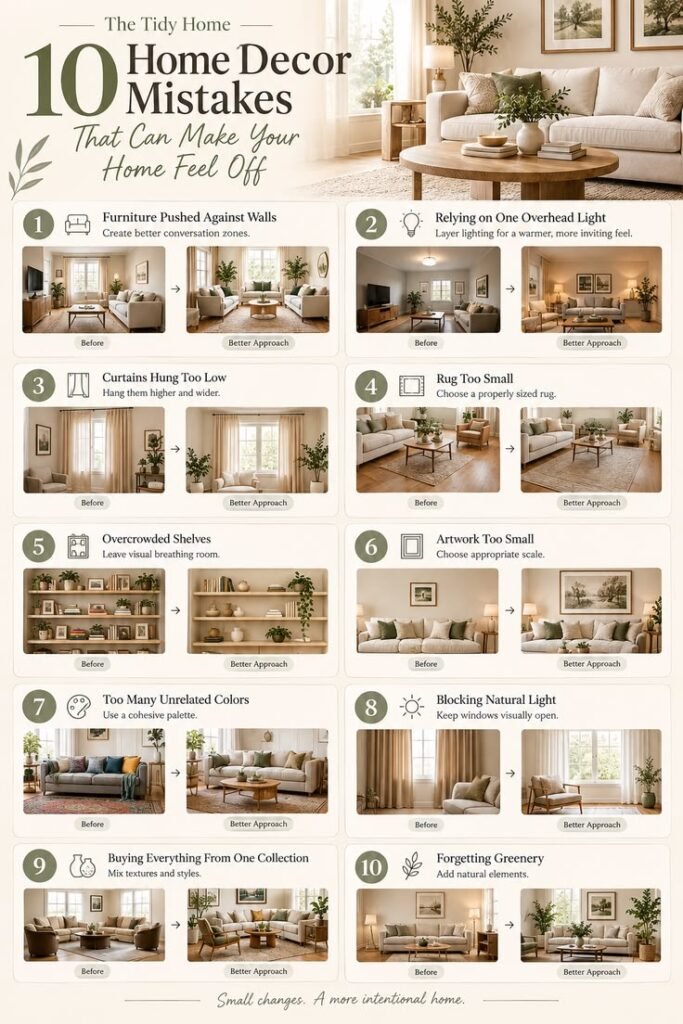
Depending only on a single ceiling light can make a space look flat and poorly illuminated.
A combination of lighting options can improve the overall atmosphere:
Ambient lighting for general illumination.
Task lighting for reading and cooking.
Accent lighting to highlight decorative elements.
Natural lighting to make spaces feel brighter.
Consider window placement, sunlight direction and artificial lighting requirements during the planning stage.
6. Using Too Many Colours and Materials
Combining too many colours, textures and finishes can make your interiors look visually crowded.
Instead, select a consistent colour palette for the entire home. Neutral shades can create a calm foundation, while accent colours add personality.
For example, beige, white and warm wood finishes can work beautifully together. You can introduce additional colours through cushions, curtains, artwork and decorative accessories.
Maintaining consistency helps create a balanced interior design.
7. Overlooking Ventilation and Natural Light
A beautiful home should also provide a healthy and comfortable indoor environment.
Ignoring ventilation and natural light can make rooms feel dark, stuffy and uncomfortable.
During planning, consider window positions, airflow, curtain selection and suitable room layouts. Avoid blocking windows with oversized furniture or unnecessary partitions.
Good ventilation and natural lighting can make even compact spaces feel more welcoming.
8. Choosing Materials Without Considering Maintenance
Not every material is suitable for every household. Some finishes require frequent cleaning, while others may not withstand moisture or everyday wear.
Before selecting materials, consider:
Durability and quality.
Ease of cleaning.
Moisture resistance.
Maintenance requirements.
Suitability for your lifestyle.
For homes in Kerala, moisture and humidity should be considered when selecting wood finishes, laminates, hardware and other interior materials.
Choosing practical materials can help maintain the appearance of your interiors for years.
9. Not Setting a Realistic Interior Budget
Starting an interior project without a proper budget can result in unexpected expenses.
Before selecting designs and materials, decide how much you are comfortable spending.
Divide your budget into important categories such as:
Modular kitchen.
Bedroom interiors and wardrobes.
Living room furniture and TV units.
Lighting and electrical work.
False ceilings.
Decorative finishes.
Installation and execution.
Keep a contingency amount for unexpected requirements. A realistic budget helps you prioritise essential features without compromising overall quality.
10. Not Hiring the Right Interior Design Professionals
Interior design involves several stages, including space planning, material selection, design development and execution.
Trying to manage everything without professional guidance can result in coordination issues and avoidable mistakes.
Working with experienced interior design professionals can help you:
Plan functional layouts.
Select suitable materials.
Make better use of available space.
Maintain design consistency.
Coordinate different stages of the project.
Choose professionals who understand your requirements, communicate clearly and can provide suitable design solutions.
How to Create a Well-Planned Home Interior
Avoiding these mistakes starts with understanding your lifestyle and planning every space carefully.
Before beginning your project, prepare a list of your requirements, identify your preferred design style, establish a realistic budget and discuss your expectations with your interior designer.
Whether you prefer contemporary interiors, minimalist spaces or warm traditional designs, the right planning approach can help you create a home that reflects your personality.
Why Choose Casa Solutions for Your Home Interiors?
At Casa Solutions, we focus on creating interior spaces that combine practical functionality with appealing designs.
From living rooms and bedrooms to modular kitchens and complete residential interiors, thoughtful planning plays an important role in every project.
We work towards understanding homeowners’ requirements and developing interior solutions that suit their preferences, available space and budget.
If you are planning to design or renovate your home in Kochi or Ernakulam, Casa Solutions can help you take the next step towards creating your dream home.
Ready to transform your home? Contact Casa Solutions to discuss your interior design requirements and explore suitable solutions for your space.
Frequently Asked Questions
1. What are the most common home interior design mistakes?
Common mistakes include poor space planning, insufficient storage, unsuitable lighting, choosing impractical materials and not setting a realistic budget.
2. How can I avoid mistakes when designing my home?
Start with a detailed plan, understand your requirements, establish a budget and consult experienced interior design professionals before beginning the project.
3. How important is storage in home interior design?
Storage is essential for maintaining an organised and clutter-free home. Built-in wardrobes, modular cabinets and multifunctional furniture can help maximise available space.
4. Which interior materials are suitable for homes in Kerala?
Materials should be selected based on durability, moisture resistance, maintenance requirements and the intended application. Professional guidance can help identify suitable options.
5. Should I hire an interior designer before starting construction?
Consulting an interior designer during the planning stage can help coordinate layouts, electrical points, storage requirements and other interior elements more effectively.